About My Quest

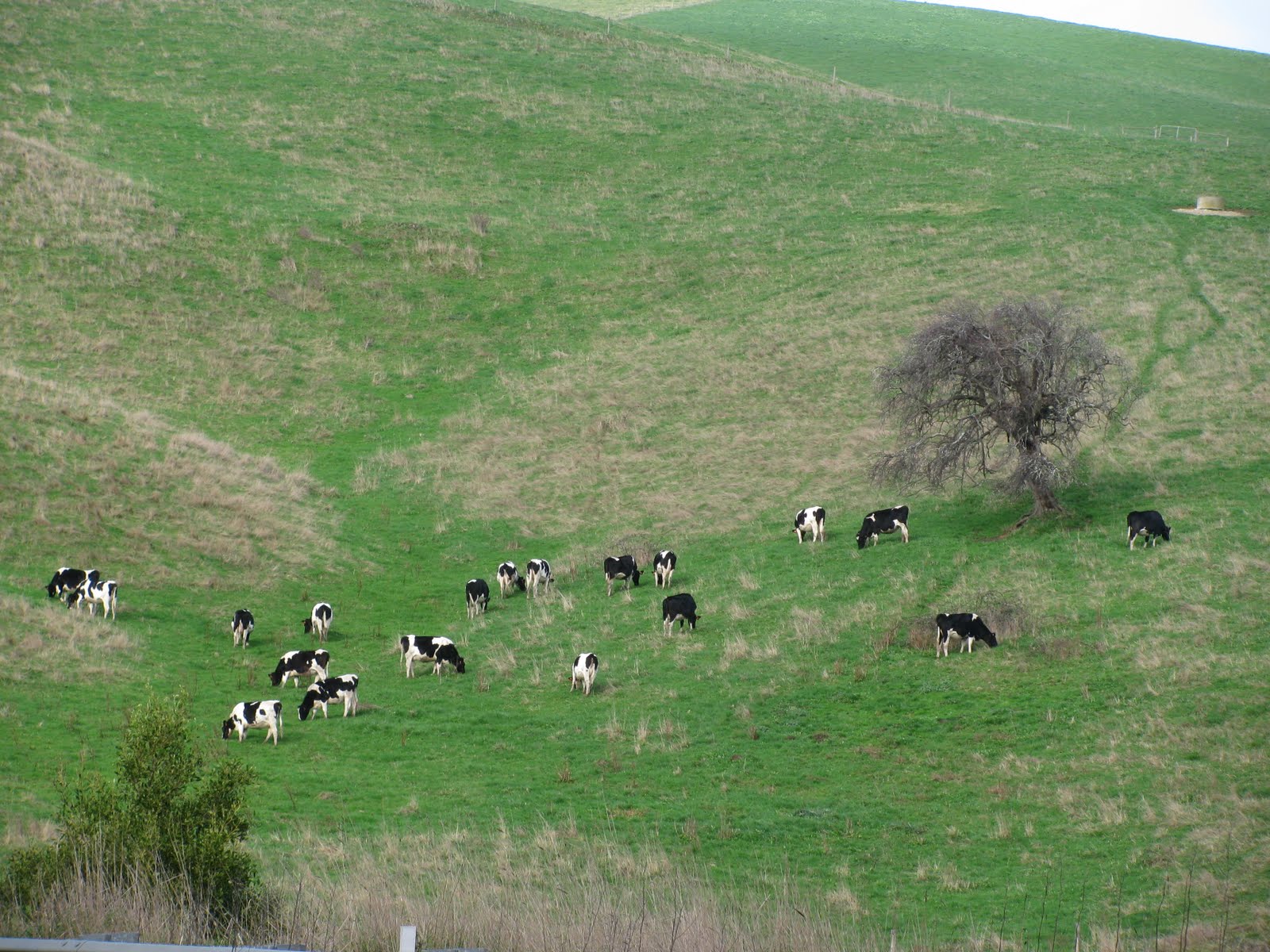
Happy pigs in mud, cows in clover. This is the way we like to think of farm animals. Unfortunately this is most often not the case. My love of animals and conviction that eating meat is part of the ideal healthy human diet has led me to seek out meat that is:

Humanely raised and treated
Free range
Grass fed
Hormone and Antibiotic free
Pesticide free
Affordable

Although certified organic food is wonderful because you are assured that the producers strictly satisfy the above criteria the cost of these products is generally very high and not affordable for everyone.
'Organic' is a ridiculous term because it simply means that it consists of natural elements. Many food producers are predominantly 'organic' by the definition set out by reputable certifiers however for a range of reasons they do not bother with the expense of becoming certified.
Many farmers produce food that fits the list above and I plan to find them. I encourage you to band together with friends, family and colleagues to buy in bulk direct from these farmers.

Tuesday, February 12, 2013

This post has been a very long time in coming so I apologise to the small group of followers and the occasional web traveller who stumbles across this blog in search of answers only to find a ghost of an inspiring blog.

You see my husband, toddler daughter and I are having an adventure of our own and we have moved to Spain. It has taken a while to find our feet, start grappling with the language and feel settled. So obviously this has meant that my mission has been shelved.

I hope and know that the information is still useful to people.  If you have any information about farms, suppliers etc I am happy to include your information here for others with the disclaimer that people need to vett for themselves. Even if you are a farmer or a supplier and claim to satisfy my criteria I am happy to include you and people can ascertain for themselves if your product is what they are looking for.

So I have encountered a whole new set of issues trying to source humanely raised, free range healthy meat here in Spain. The language barrier is a huge obstacle obviously. However we have been happily eating lovely jamón from a pig that has been free range raised in a Unesco biosphere reserve who feasts on his favourite food of chesnuts until his demise. I know for a fact that these animals have a superb quality of life but I don't know about slaughter practices and transportation. I do however know that the distances are quite short so the problems of transport we have in Australia are unlikely.


Two jamon legs strapped into the child seat of our bicycle:-)
Other than that I have been lowering my meat consumption and trying to buy écologic' where possible but i am not completely sure of the standards of this certification. Wish me luck. Maybe I will start a European site someday.
 
Some of you have been a bit confused as to why I have included information on here about big chain supermarkets and suppliers. In my utopian ideal we would all buy either organic meat or CICO meat direct from farmers with meat that that satisfies my criteria however I am a realist and understand that not everyone is able to nor wants to go down these lines for various reasons. Rather than just give up  I would rather provide information that helps people buy slightly more humanely raised, healthy meat. Is this a cop out? No I don't think so. Many cannot afford órganic'meat, do not have the time or energy to source meat direct from farmers. If a large section of the market supports more affordable less cruel, more healthy meat by buying these products at the supermarket then it will affect change. In fact it already has and Coles and Safeway are making headway on offering these products. Their decision to eradicate caged eggs from their shelves will save hundreds of thousands of hens from the worst treatment imaginable. It has much more impact than the dozens of people I have influenced or maybe the hundreds that a small farmer supplies.So to Mc Ivor Farms (see their comment below this post here) I know that there is a considerable difference between your beautiful happy pigs and the outstanding product that you offer and the product that Otway Pork provide as you describe in your comment. Otway Pork are a 1 on the utopian ideal and you are a 10 but I firmly believe that change needs to come from a number of sources and the long list of cruelty that does not occur at Otway Pork is a very positive step in the right direction affecting a lot of pigs and consumers. See my blog post and comments on this here
.So I want to make it clear that my aim is to encourage everyone to buy from sources such as Mc Ivor Farms and Farmer Dan but I am not burying my head in the sand and pretending that it is realistic that everyone will embrace my goals. This doesn't mean that people don't care and can't help. I hope that anyone reading this can find ways in which to make positive changes for themselves, family and the animals.

Wednesday, October 12, 2011

Trying to source humanely raised pork


Hello again! Now for Pork....

Ok so this blog has fallen by the wayside as many blogs do. Not because I can't be bothered, or I've lost interest or don't care but because my life over the last year has been irrevocably turned upside down. We call it Hurricane Miranda and it was the birth of our tempestuous daughter. A wonderful amazing and exhausting year it has been.

I still have a keen interest in animal welfare issues and seek information about humanely raised meat. I am currently not in a position to to drive for many hours to personally go and see the farms however I have still been making a little progress. Many people ask me about CICO pork because there is very little pork readily available that is not misery raised. According to Animal Liberation "There are some 5.3 million pigs kept for meat in Australia" and the vast majority are kept in horrifying conditions. See and read here if you want some motivation to seek out humanely raised meat.

Due to my baby related constraints I have deviated a little from my original intention of seeking bulk meat from farms that I have personally vetted. However I have continued to do some research on where and how to source humanely raised, free range meat that is affordable.
Although I cannot vouch for these sources of pork I feel it is better to support a trend towards free range than to support factory farming.

On the issue of affordability pork is much more expensive than beef because it costs more to raise pigs in free range. Pigs require indoor housing to protect them from cold and sun as they are not as weatherproof as other animals because don't have coats.

Free range or even organic Bacon and smallgoods products seem to be largely non-existent in the mainstream.
I discovered that the Healesville Hotel group source their bacon and ham from a charming family run butcher in Belgrave. Bill's of Belgrave sell mostly free range meats. Their pork comes from Otway Free Range Pork and they make their own amazing ham, bacon and sausages.

The baby and I personally visited this week and purchased Kassler pork chops, pork loin chops, divine bacon scraps and heavenly hickory smoked bacon. The bacon is $25.99 per kilo. At the supermarket the only free range bacon I have found is $39 per kilo and no where near as nice.

Keep Bill's of Belgrave in mind for Christmas for lovely happy ham. Belgrave is not that far from Melbourne so you can make a delightful day trip of it, visit the hills and stock up on some great free range produce. 'Like' them on facebook and keep up with their specials. They also sell free range chickens from Glenloth Game and Hazeldene's Chicken. A size 16 Hazeldene free range chicken is $12.99. To be honest I didn't look at their beef as I am happy with my farm direct supplies but they also source their beef from Gippsland. At a glance these prices were also reasonable so they have a lot more than just great pork.
http://www.facebook.com/pages/BILLS-OF-BELGRAVE/166851799213?sk=info

I am very interested in McIvor Farms as their website claims that they are available at Coles but I have never seen them and I spend a lot of time cruising meat aisles of supermarkets to keep an eye on things.
A reporter for the ABC visited McIvor Farms and it seems they are the real deal
http://www.abc.net.au/rural/reporter/stories/s1544634.htm
www.murrayfreerange.com.au
You need to pre-order but their bacon $22.50 per kilo www.mcivorfarmfoods.com.au/the_foods
Option to buy in bulk and have delivered

I've also discovered King Valley Free Range Pork do bulk pack delivery. kingvalleyfreerange.tripod.com/index.html However I notice many of their prices are a little more than Bill's of Belgrave but delivery is convenient.

They are apparently endorsed by the Victorian Farmer's Markets Association (VFMA) According to their website
"The (VFMA) tick symbol means King Valley Free Range Pork has been accredited by (VFMA) which guarantees we grow & make the produce we sell."

Free Home Delivery to :Beechworth, Wodonga, Albury, Corowa, Rutherglen, Shepparton, Benalla, Mansfield, Seymour
Melbourne & Surrounds Minimum of 5kgs for free delivery, or $30 delivery charge will apply.

Large Black Pigs do Pig in a Box which can be collected or delivered
http://www.largeblackpigs.com.au/pigbox.shtml

So there are a few options. I will explore some of them further and report back. Please let me know if you have any experience or information to share on humanely raised, free range, affordable pork or any other meat for that matter.

Sunday, October 9, 2011

The Food Sage says it better...

Yet again I am going to link to The Food Sage a great blog for those interested in food and all manner of issues that surround it, I love reading her exquisitely written, thought provoking articles.

Essentially this entry eloquently makes the same suggestion that I am. That there is an opportunity for positive change through consumer choices, reducing meat consumption, adding vegetarian meals to our diet and wasting less of an animal by eating nose to tail.

The gist is that it is unrealistic to preach one answer. Vegetarianism may be a wonderful solution to issues of sustainability and animal welfare but only a minority will adopt it for ethical reasons. We all agree factory farming is the most hideous practice. If we could successfully lessen or eradicate intensively farmed meat by offering compromise solutions to the mainstream it would be a major win and a more likely outcome than a lofty ideal such as universal vegetarianism.

Please find the time to read the whole article here


Tuesday, May 31, 2011

Free Range Eggs


This post will both inspiring and depressing yet hopeful on the subject of sourcing free range eggs.

Let's start with the bad. Animals Australia has a campaign running to stop large egg producers from farming 'free range' hens who will be producing eggs without ever having seen the sun if new standards are introduced.

The Australian Egg Corporation Ltd, the egg industry body, is considering allowing farmers to run 20,000 hens per hectare, currently there is a voluntary standard of 1500 hens per hectare. The proposal is that hens will be kept indoors for the first 25 weeks of their life but will start producing at 18 weeks.

This is an example of my suspicion that farmers much like any businessman will farm animals to produce at the highest rate possible with little consideration for their welfare. Worse still they are happy to latch on to a well meaning term like "free range" and bend it to suit their business objectives. Thus taking advantage of the inherent misrepresentation. Look at the cartons of many eggs and you will see hens roaming in green fields even on cage eggs.

I think animal products should be packaged similarly to cigarette packets with graphic images of the conditions and environment that this product was derived from. I know I'd be happy to pay more for the eggs from content hens in rolling green fields than the featherless cage hens.

So now for a delightful tale of 'free range' egg farmers who not only truly have free range hens they house them in caravans and move the hens overnight to greener pastures. This delightful lifestyle ensures that the chicken manure fertilises the property evenly.

You can read the full article here:


Please support Animals Australia's campaign to regulate the free range egg industry.
http://www.animalsaustralia.org/take_action/save-free-range-eggs/

Please sign this petition to stop live animal export


http://www.getup.org.au/campaigns/animals/live-export/ban-live-export

This is a beautiful Brahman calf, the breed of cow that Australian farmers sell to the Indonesian market.
Australian cattle are being slaughtered in appalling conditions in Indonesia. Despite the government and cattle industry being aware of the situation for 10 years this barbaric practise continues.

Animals Australia and RSPCA Australia have joined forces to campaign against live animal export. Taxpayers are contributing to the current method of slaughter by the installation of boxes and training to enable Indonesian slaughtermen to pull the beast to the ground whilst contained in a box. These boxes were supplied because it is difficult and dangerous to ground the animal when not confined. The tools and methods of slitting the throat are unacceptably rough and long. The slaughterhouse staff obviously do not see the creature as an animal, they simply treat it as an object that needs to be moved and processed and using horrifying cruelty to achieve this objective.

Four Corners has prepared an extensive report if you wish to see it for yourself.
http://www.abc.net.au/4corners/

Watch it or not please sign the petition and donate to Animals Australia if you want to help stop this cruelty.

In relation to this blog's objective this is an extreme scenario however this issue strengthens my conviction that we need to be conscious of where our meat comes from, how it is treated and handled. I'm just about to purchase some more meat from The Farmer's Market to once again support Farmer Dan because I know that his animals are treated with respect and their quality of life is no less than they deserve.

Sunday, February 27, 2011

Coles Supermarket - Hormone Free Beef


So, Coles Supermarkets are offering hormone free beef. They have set up their own supply chain of farmers who they deal with directly.

Clearly healthy meat is a priority for consumers and whilst this meat is not cruelty free and therefore does not satisfy my main concern it does signal the desires of consumers for change.

"Since we started the campaign, we've seen double-digit growth in that category," said Jon Church, Coles spokesperson.

I have mixed feelings about this new campaign.

However I am pleased that Coles is taking a stance on this issue. A large company like Coles has the power to influence a lot of people and they have certainly increased awareness in a way that no one else can.

The beef industry is kicking up a fuss claiming that Coles are damaging their business by suggesting that there is something wrong with hormones.

It is true that much of the beef produced in Australia does not contain hormones but 40% of it does. The use of Hormone Growth Promotants (HGP) has been banned in Tasmania and the EU due from what I can gather, unsubstantiated concerns of links to disease.

The beef industry cannot sufficiently prove that the hormones are safe and consumers should have the right to choose. This has always been my ultimate goal. I hope that one day consumers can choose not to buy the cheapest meat that is farmed in the cheapest possible way and they can opt to buy moderately priced meat and know everything about what it contains and went through before arriving on their plate.

This is a very small step towards a healthier and more humane choice but Coles is also stepping up their range of free range meat and organic meat and banning cage eggs for their in-house egg range.

Many people have declared that they don't trust Coles and that they are just money hungry. I couldn't care less whether Coles is doing this out of the goodness of their heart, for increased profit or both. I am buoyed by the fact that consumers want happier, healthier meat and even the large chains are beginning to take notice and offer it. The vast majority of the food Australians eat comes from Coles and Safeway, if they are open to change then there is a greater chance that it will happen and have maximum effect. This is only likely to happen if the supermarkets can make money out of it.

Wealthy people buying expensive organic meat is never going to achieve maximum impact.

Coles general manager of meat, Allister Watson has stated,

“Coles is aware of widespread consumer concerns about additives in food and livestock and animal welfare practices.

I do hope that consumer support for these initiatives will encourage Coles to continue along this track. I will be watching very carefully to see if this is the case. In the meantime I choose to support their organic and free range lines in between my orders from my farm direct suppliers.

For a more comprehensive opinion on this issue have a read of this great blog

Pork at The Farmer's Market

The Farmer's Market now has pork. Well they have some pigs and in the coming months will be able to offer pork. The pork will only be available if you purchase a beef or lamb pack. They have also added free range whole chickens and eggs and honey from Dan's own bees. Really I could just chuck this blog in because the Farmer's Market has everything that I was searching for but in the interests of impartiality I do intend to pursue more farms.

Have a look at the Farmer's Market for more info about the range of products they now offer.

Sunday, November 7, 2010

More on Otway Pork


I have just realised that Otway Pork is RSPCA endorsed which Peter Singer and Jim Mason authors of The Ethics of What We Eat say is the most reliable endorsement to guarantee that strict animal welfare standards have been adhered to and due to regular audits are continually maintained.

From the Otway Pork website...

RSPCA Accreditation

The welfare of our pigs has always been paramount. We do not crate or cage Otway pigs, we don’t dock their tails, and we don’t use nose rings – these are all important in keeping pigs free from pain and discomfort. Otway Pork was also the first pig producer in Australia to adopt the RSPCA Approved Farming Scheme. This scheme is based on a set principles established by the RSPCA known as the “five freedoms”:

  • Freedom from hunger and thirst

  • Freedom from discomfort

  • Freedom from pain

  • Freedom to express normal behavior

  • Freedom from fear and distress.

Otway Pork is readily available at large chains such as Coles, Woolworths etc I have noticed that there is a large difference between supermarket outlets in different areas. For instance South Melbourne Coles seems to have less of a range than Prahran Coles in Melbourne.

My husband and I have been enjoying the scotch roast and were delighted to get the already reasonably priced ($13.99 per kilo) roast for a further 30% off as it was a day off expiry.

We decided to test it on our new bbq rotisserie. As it is more than ample for my husband and myself, it should actually feed four people, our little spoiled pooch did quite well out of the arrangement too.

In the New Year I plan to get on the road again and visit farms to verify their claims for myself. In the meantime I can only let you know what I am doing myself to support businesses that are acknowledging that animal welfare is important.


Friday, September 24, 2010

Free range and organic at the supermarket

I know it's been way too long since I have posted. Life, primarily work has just been getting in the way lately. I haven't stopped thinking about my quest and I still have lots of research to do.

I have been happily eating meat from my suppliers feeling like I have achieved my initial objective of sourcing affordable essentially organic and humanely raised meat. However I have only sourced beef and lamb. For my chicken and pork I have done the next best thing in my opinion which is buy free range and/or organic from the supermarket. Ultimately I hope that CICO meat will be readily available and affordable in convenient locations such as the supermarket. I have noticed lately a lot more choice and a generally cheaper price in free range and organic meat at Coles and Safeway. So hopefully the change is coming.

I am not convinced that these producers are all that they seem as they are obviously producing on a large scale. However I feel that it is better to support farmers that are producing meat that is free to roam at least some of the time and who don't use pesticides etc because it sends a message to the supermarket that this is important.

I have purchased pork from Otway Pork. Their website is very convincing and the meat is really lovely. I paid between $14-$24 per kilo, which for free range pork is very reasonable. It is more expensive than all the CICO beef but raising pigs is much more expensive than beef as they need shelter and I believe more bought food rather than pasture. I hope to visit them personally in the future to see for myself and give you an objective opinion.

Lilydale Chicken is the supplier whose chicken I have been buying and much like Otway Pork have a slick yet realistic looking website and I hope that they are genuine. When I have time to venture to these areas I will contact both Lilydale Chicken and Otway Pork for a site visit.

I haven't found any chicken or pork suppliers that can sell in bulk like my beef suppliers making the cost even lower. So unfortunately for now I have to pay considerably higher prices for chicken and pork but at least I feel that they have had some quality of life before arriving on my plate.

Incidentally, friends have been concerned that when they invite me to their house for dinner that I would be horrified if they don't serve me free range or organic. I want to make it clear that we all have to do what we can do and I don't judge people that buy any old meat. The whole point of my crusade is to make it easier for everyone to make ethical and healthy choices not berate people when they can't afford it or don't have time. People are not choosing to eat cruelty raised, unheathy meat because they prefer it, they do it because they don't have the information and choice needed to be able to choose better alternatives. I even, shock horror, buy bacon occasionally that is definitely not raised humanely but I don't beat myself up about it because I am actively doing what I can to help the situation and there is no point on dwelling on the times that I failed to meet my objectives.

So for now I definitely haven't forgotten and I absolutely have not given up. I am just giving the blog a rest whilst I work to earn money and prepare to have a baby in December.

In the meantime I am still doing the following:
  • Reducing meat portion sizes
  • Eating vegetarian meals from time to time
  • Ordering beef and lamb through the farmers I have already vetted. You can see them here.
  • Buying predominantly free range but also organic when I see it at a reasonable price or on special at the supermarket to send a clear message to the supermarkets that this is important
  • Eating nose to tail. Read more here.
  • Always buying free range eggs. I would rather eat less eggs than support cage eggs
These are really simple steps that you can take to ease your conscience and vote with your consumer choice for a better future.

Thursday, June 24, 2010

"The farmer gets $5 a kilo. You pay $69"


This interesting article illustrates the point that I am trying to make. Good quality meat is produced at a reasonable price but the supply chain swallows up the value.
I assume that the butcher in Surry Hills knows where his meat comes from because he could not get away with charging this price if it was not good. I bet it is just as good as the meat that I now pay $15 a kilo to have delivered to my door. See my ever growing list of suppliers here.
Conversely I have paid $15-$20 a kilo in supermarkets for tough as old boots misery ridden meat.
I have of course paid similar amounts for lovely meat from the supermarket but the animals may or may not have had a reasonable quality of life and who knows what chemicals and hormones were used in the production. It is a lottery.
My long term plan is to lobby government to make changes to labeling so that the consumer knows all this information and can make purchasing choices. As the articles states all this information is available. All farmers must fill out detailed information about what they feed the animals, the age of the beast, the medications used. If we could also see this information then we would know what we are buying and the prices would become more standardised.

Thursday, June 10, 2010

Two more beef farm visits


After nine hours of driving today I have two more farms to add to my list of recommended CICO suppliers. I must remember that country people wave at you when driving. I felt like such a city slicker when my initial reaction was that something was wrong and I felt rude that I missed my opportunity to wave back.

ALEX & CHRISTINE'S FARM
First stop Alex and Christine's farm in Alberton West. Christine cooked an amazing lunch but I assure you that this has not clouded my judgement. Alex and Christine have 5 children and at last count 16 grand children so it is in their best interests to produce healthy natural meat for the family.

See the happy and content cows in my pictures here.

Alex and Christine satisfy the all of the CICO criteria. They hand pull weeds from their property and are very proud of eliminating the thistle infestation that they inherited when they bought the farm. The cows are fat and healthy and like all the CICO cows are grass fed.

To purchase meat from Alex and Christine please call Alex on 0431 158 638. They will have a webpage shortly. They will only sell half and whole sides presently but they can do this for a good price and can customise your order to suit the number of people sharing the pack or make steaks to your required thickness.

FAMILY FARMED MEATS
The next farm is Family Farmed Meats in Fulham near Sale. Belinda's family have been on their land for 5 generations. They are particularly passionate about natural chemical free meat production because they sadly lost their father to cancer recently.

Belinda is obviously knowledgeable about cattle and feeds only grass, hay and controlled lucerne. She has a business savvy and has taken the family business to new heights with a great website, publicising the fact that the meat is free range, grass fed and chemical free and supplying meat directly to public through delivery and farmer's markets.

You can visit the website www.familyfarmedmeats.com for information on ordering and farmer's markets. Belinda is looking to expand to lamb and also does pre-cooked meals. I only have a couple of photos as it was getting late in the day and the light was fading but Belinda has lovely photos on her website for a better idea.

Sunday, June 6, 2010

Nose to Tail Eating on Masterchef

I was delighted to see the episode on Masterchef featuring the amazing Fergus Henderson. Henderson is the chef who popularised the term 'nose to tail eating' which I have referred to before without realising this association.

You can watch the episode here.

The episode featured, fried pig's tails, stuffed pig's trotters and pig's head terrine which sound terrible but taste wonderful.

Fergus is not a trained chef he simply learnt the art of cooking from his parents. He opened the acclaimed and lauded restaurant, St John's in London and is famous for his use of the whole animal. I just love this quote from him...

"if you're going to kill the animal it seems only polite to use the whole thing"

I think that we should all keep this in mind when making food choices. I know we all have our favourite cuts of meat but with a little imagination and effort other cuts of meat can also be equally delicious.

For help with how to use more of the beast have a look at Fergus' famous book Whole Beast - Nose to Tail Eating available at Borders and other book stores. I also found it at my local library.


Saturday, May 22, 2010

Review of first meat order

Not enough time to read my full ramblings? Read my summary here.
I received my first order from the Farmer's Market. Two other couples and my husband and I shared a 20kg beef pack and an 18kg lamb pack. The ordering process was easy. The confirmation stated that the order would arrive in 2-5 business days and it arrived on the 5th day but they indicated to me that this would be the case.

Wow we are really impressed with the meat and the ease of the transaction. I received the meat and our friends came that night to do the quick divvy up. We deliberately chose items that would divide easily and one friend did a great spreadsheet that helped us allocate the meat via email. I might work on it for this blog for future reference to make it more universal so you can use it too.

So what exactly is the meat like? Well let me first explain as Farmer Dan did to me the difference between free range grass fed and feedlot grain fed. Free range grass fed cattle get exercise and eat less fattening more nutritious feed so they have a leaner more muscular physique this is why Farmer Dan makes this distinction clear by calling his business Gippsland Lean Beef. It doesn't mean that he takes all the fat off his produce which trust me is a good thing, more about that in a future post about fat. Grain fed feed lot animals have a floppier muscle tone, unnatural amounts of fat and a lighter flavour due to the more bland feed.

I was a little concerned about these facts because our tastes have come to expect a very tender and light on flavour meat and I worried that my friends might find that their nearly 15kgs of meat may not be to their liking.

However they were not disappointed and neither was I. The meat is not tough but rather firmer and more dense and still melt in the mouth. The additional flavour is great and needs less seasoning. In order to do the meat justice it is important not to overcook. I unfortunately did over cook the first porterhouse to medium, we like medium rare but testimony to the lovely quality it was still tender and easy to cut with a table knife and chew easily with no toughness at all. It was simply a bit dry in texture for our taste and in my opinion disrespectful to the meat.

I cooked the rump steak perfectly and it was the best rump steak that I have ever tasted.
Here is how I did it. I like the method below because it gives you time to get the vegetables on to the plate and then at the last minute reheat the steak so it is served hot.

Tips for cooking the perfect steak.
Prewarm oven to 110 C and leave a dinner plate inside to heat
Cook steak on high heat for a few seconds back off very high but leave flame on high for 2-4 minutes depending on thickness, basically until the blood rises to the top
Turn and repeat, cook on high heat for a few seconds back off very high but leave flame on high for 2-4 minutes
Place steak on dinner plate and cover with foil. Turn oven off and put steak plate in the oven but leave the door open. Leave for 3mins (or up to 10 mins if you need it to get your vegetables served)
Reheat pan to high heat and flash cook steak on each side for a few seconds only and serve immediately. I learnt this method from a chef at Crown Casino.

The challenge of purchasing this meat is what to do with all the various cuts of meat that I have to admit I previously did not buy because I, like most people did not think about the fact that it is unsustainable to only eat the choicest cuts of meat. For further information look at relevant post here. With the approach of winter it is not hard to find appropriate recipes for the season.

This is what else I have done or intend to do.

We received 10 kgs of Beef:
Osso Bucco - made Osso Bucco
Stewing Steak - made Beef and Vegetable Soup and Thai Beef Coconut Curry
Gravy beef - Guiness Irish Stew
Diced Beef - Italian Beef and Red Wine Ragu
Stir fry - Thai Beef lime and chilli noodles
Schnitzel - schnitzel
Scotch fillet - steak with bearnaise sauce and herb mash
Oyster blade - Madras curry
Porterhouse - steak with red wine jus and vegetables
Eye fillet - steak - haven't tried this yet, the steak is buried somewhere in the packed freezer but I am looking forward to it as I imagine that it will be much tastier than eye fillet I have experienced before.
Rump - made steak with garlic butter and vegetables
Sausages - made Bean Cassoulet, Pasta with chilli, sausage and roquette
Mince - made Spaghetti Bolognese, Mince and rice stuffed vegetables

Many of these dishes can be frozen or stored in the fridge for lunch the next day. So even though some of them are a bit time consuming when you divide the time over several meals it is far more time efficient.

6kgs Lamb
Unfortuntately these packs were not labelled so apart from recognising, cutlets, lamb legs, bbq chops, loin chops there are a few unidentified cuts that will become apparent once I defrost. So I 'll get back to you on the lamb options.

In summary I am delighted and relieved that I can wholeheartedly rave about the quality of the meat available at the Farmer's Market. Best of all I can guarantee that the animals had a great quality of life and were treated with the respect they deserve. See. All this for A$13-$15 kilo delivered to your door. Compare this to the equivalent certified organic meat A$28-$50+ per kilo.


Friday, May 7, 2010

Nose to tail eating


I have another couple of farmers lined up and hope to get out to see them in the next few weeks in the meantime I want to discuss other ways that can help make meat consumption more sustainable and affordable.

Apart from sourcing CICO meat what else can we do to help the environment and our impact on it?
I assert that the pinnacle of healthy eating includes meat in the diet. Being an animal lover I am tempted to be vegetarian but I also have a preference for a natural state of being and naturally humans are designed to eat meat.

However the modern western diet has gone too far and due to factory farming technology and practice the ready supply of meat has increased our consumption to unhealthy proportions. I would wager that a vegetarian diet despite having certain deficiencies is often healthier than the average Australian diet.

However I digress, the objective is to eat meat that is healthy for me and ease my conscience that the animal I am eating has not suffered unduly in it's lifetime.

If we eat smaller portions of meat then we keep the cost down or offset the increased cost of CICO meat, reduce our intake to a healthier level and slaughter less animals.

We can also use more of the whole animal, it's called nose to tail eating.
All the farmers I have spoken to so far have mentioned their desire for consumers to realise that farming is not sustainable if everyone wants to only eat the most choice cut of meat.

If you only want to eat the eye fillet or the porterhouse what happens to the rest of the animal? Currently a lot of animals are slaughtered for the popular cuts of meat and the rest if pulped for dog food or livestock feed. This is why farmers like Dan and the others whom I will soon feature prefer to sell packs of meat that include a bit of everything from eye fillet to sausages. This way less animals need to be killed to feed us and the overall price can come down.

As I have now ordered from Gippsland Lean Beef and will receive several packs of sausages I have been researching recipes. With winter rapidly bearing down upon us I am delighted in my findings.
  • French Cassoulet - bean and sausage stew
  • Bangers and Mash with Guinness sauce
  • Rustic Italian style pasta with sausage, chilli and rocket
  • Lasagne with added sausage
  • Rice and sausage stuffed vegetables
Offal was never something that I readily accepted from a taste and texture point of view. However recent time in France and with my mother in law in England who is an amazing European style cook I discovered just how delicious it can be. I still haven't taken to brains but liver, hearts and kidney when cooked skillfully I find divine, high in iron and also very cheap.

Pate` is very easy to make and is one of the best ways to disguise liver. Recipe here. There are lots of wonderful seasonings that you can add to pate`, Google for more adventurous recipes. For instance this wonderful Julia Child recipe.

Chicken hearts barbecued on a skewer Brazilian style is surprisingly lovely, see pic above. Recipe here.

I love to cook any offal in this way:

Saute` onion in clarified butter, add fresh chopped rosemary and chopped bacon rashers and cook til' opaque, add chicken hearts or chopped liver and cook until just pink inside. Do not overcook or it will become rubbery. serve with crisp salad with some radicchio leaves is particularly nice.

I also once had an amazing dish of rabbit hearts in a delightful sherry cream sauce at Bar Lourinha in the city in Melbourne. I notice that they are currently serving pork neck, calf liver and oxtail and I guarantee you they all taste delicious.

Let's not forget the steak and kidney pie

We live in such a wasteful society and I find it incredibly sad that we 'waste' an animal's life often before and after death. It's not so hard to limit our wastefulness. Is it?

Sunday, April 25, 2010

Farmer Dan at Gippsland Lean Beef


The visit to Gippsland Lean Beef was a great success and huge learning curve for me.
Farmer Dan wholly fulfills my stated Cows in Clover objectives and I can thoroughly recommend his products. He genuinely cares about the life of his animals and I witnessed their idyllic lifestyle first hand.
Farmer Dan is a Horticulturist by trade and he incorporates this knowledge into his approach.
Gippsland is a beautiful area and here are some of my pictures of the visit.

PESTICIDES
Pesticides are not used on the farm at all. Rotating sheep and cattle fertilises the paddock and controls weeds. Dan explained that thistles are deep rooted and bring nutrients to the surface and cows eat them when they start to die off which keeps control of the situation.

ANIMAL WELFARE
A number of methods are used to ensure the best possible quality of life for the animals. A nearby abattoir is used to slaughter the animals which minimises the stress of long journeys. Only transporters that don't use cattle prods and who are gentle with the animals are engaged.

Dan uses a nifty system for stress free weaning of calves and lambs. In commercial farming, calves and lambs need to be weaned from their mothers earlier than in nature otherwise the mother will lose condition. In many farms babies are simply separated from their young which is very distressing for both the mother and baby. Mum's will moan and bellow sometimes for days at a time and kick fences trying to get to the baby she is pining for. It is a very sad scene that factory farmed animals continually relive throughout their lives.
Dan leaves weaning as late as possible and then applies a harmless ring to the young one's nose. The ring is plastic with spikes that dig and tickle the mother when the offspring try to suckle. She nudges the young away just as she does when she is ready to wean . This way the bond is subtly broken and the mother can continue to be healthy.

The cows roam in roomy pastures with dotted trees and plenty of drinking reserves and not that the cows care but picturesque scenery also. When we arrived at the paddock the cattle eagerly ran up to meet us and surround us. They are not tame, when you move towards them they shy away but they have a healthy curiosity and a hopefulness that food is on offer despite the abundance of lush green grass at the moment. They are social and frolic amongst themselves whilst keeping an eye out in case we decide to offer food. The sheep were off in the distance but looked similarly content.

FEED
All stock is free range and grass fed but in times of drought and winter they must have supplemental feeding. This is where I learnt the most. Have you ever seen the fancy labels that boast grain fed beef? Cows are ruminant animals this refers to their digestive system, four stomachs and a process that involves regurgitation for reprocessing, 'chewing cud"and fermentation. This process creates healthy bacteria that keeps the animal healthy by enabling it to absorb nutrients. Wheat cannot be processed in this way and gives the animal acidosis and enterotoxemia. Farmers who grain feed then have to medicate to combat this unhealthy reaction. Often when you deviate from a natural process it creates unhealthy consequences which then need to combated. This can be said about many things in life where we choose unnatural processes over natural.

Dan harvests his own organically grown hay. He also grows feed like sorghum which is like a lentil and is suitable for ruminant animals. Dan showed me the remnants of the sorghum paddock. After harvesting the sorghum Dan let the cows loose in the paddock where the stalks were over two metres high. The image he painted was like happy pigs in mud. The cows ate their way from the outside into a wall of delicious nutritious stalks. What a happy scene.

In addition Dan feeds lupins. Lupins are a high protein superior quality feed. It is more expensive than wheat but it is far more healthy for the animal and does not cause digestion problems.

CERTIFIED ORGANIC
Dan doesn't use antibiotics, he doesn't need to because he keeps his animals healthy naturally so their immune systems are strong. He refuses to use hormones. Female hormones are regularly used in factory beef production on steers (male cows) to fatten them for slaughter and calm them down so they can be kept in close confines. Dan uses no pesticides and employs sustainable and humane farming practices so why does he choose not to be Certified Organic? Dan explained that he doesn't agree with some loopholes in the certification process that allows for instance grain feeding but at the end of the day it is too expensive. There are numerous application fees, auditing fees then compliance costs, extra workload and then the certifiers want an ongoing percentage of his profit.

I feel very confident to recommend Dan's meat. He really cares about the animals and spends extra time, effort and money to give them a great quality of life and to ensure a natural healthy product. His meat is extremely good value particularly when you buy in bulk. I haven't tried his meat yet but I do have a couple of friends who have and they raved about the quality. Anyway I will be ordering some meat this week so I can tell you all about it then.
Please check out his website for more information http://www.gippslandleanbeef.com.au/
To purchase go to the online store to get his meat home delivered to the Melbourne Metro area only http://thefarmersmarket.com.au/shop/index.php?main_page
Get a group of friends together one of whom is home during the day to receive the delivery and buy in bulk to save.

Thursday, April 22, 2010

Farm Visit Update

I spoke to the lovely Farmer Danny at Gippsland Lean Beef and he is more than happy to accomodate my visit. I really expected to have to sell myself but he was very positive about my project from the outset.

I plan to ask him the following questions;
  • Why do you choose to raise and sell free range, grass fed, hormone and antibiotic free stock?
  • Why are you not certified organic?
  • Describe the life one of your animals? Do they have the opportunity to experience natural behaviours?
  • Do you use pesticides? If yes, what types? If no, how do you control pests?
  • I understand that you limit the live transport of your animals, how long do they travel and what is the process after they leave your farm?
I will also ask some questions about 'lean' meat but I will publish this information with a blog post dedicated to 'nose to tail' eating and the benefits of including fat in your diet. For now I won't confuse the issue. Currently I am seeking meat that satisfies my Cows in Clover objectives.


Friday, April 9, 2010

Organic food and my concerns

My main concerns with 'organic' produce are;

A. The term organic is ripe for abuse as it's general meaning applies to all food
B. Reputably certified organic food is very expensive often 50% more expensive
C. There is a lot of produce out there that would satisfy the criteria of certified organic but it is not certified due to work load and cost to producers

Dictionary definition of organic;

"Characteristic of, pertaining to or derived from living organisms"

So that applies to all food and in Australia the term 'organic' can legally be applied to any food because well, technically it is organic.

For the purpose of discussion I will make the following distinctions.
I will use the word organic by it's dictionary meaning. CO will refer to certified organic and CICO Cows In Clover Organic will refer to my listed objectives;

Humanely raised and treated
Free range
Grass fed
Pesticide free or limited
Hormone and antibiotic free
Affordable

The only way to ensure that you are buying CO or even CICO is to buy products with approval from a reputable certifier. Read here about which labels you should trust. By all means if you can afford it and want the convenience, study these labels and please buy up.

If animal welfare is your main priority source products with the RSPCA label. They are the only organisation that offers a certification and standard for animal welfare who actually visits the farms to ensure that they comply.

For more reading on this topic or if you wish to become vegetarian read this book. The Ethics of What We Eat by Peter Singer and Jim Mason, a horrifying, practical, factual yet inspiring book which looks at how to make animal welfare and environmentally conscious decisions when buying meat.

I aim to find meat that is first and foremost raised humanely but also adheres to the basic principles of certified organic; pesticide free, hormone and antibiotic free, free range and grass fed.


Off to Gippsland for my first site visit

After much Googling I was very impressed with these Farmers in Gippsland.


They claim to satisfy the criteria.

"So if you want meat that is free of hormones and antibiotics in addition to being raised with care and kindness - buy it direct from the farm."

They are not certified 'organic' and their prices are very reasonable. Good quality lamb packs for A$13.88 per kilo and beef packs for A$15 per kilo.

I have emailed them to let them know that I wish to visit and blog about it. I will follow up with a call to arrange a visit and see how they feel about the blogging.