About My Quest

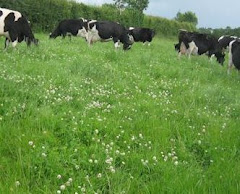
Happy pigs in mud, cows in clover. This is the way we like to think of farm animals. Unfortunately this is most often not the case. My love of animals and conviction that eating meat is part of the ideal healthy human diet has led me to seek out meat that is:

Humanely raised and treated
Free range
Grass fed
Hormone and Antibiotic free
Pesticide free
Affordable

Although certified organic food is wonderful because you are assured that the producers strictly satisfy the above criteria the cost of these products is generally very high and not affordable for everyone.
'Organic' is a ridiculous term because it simply means that it consists of natural elements. Many food producers are predominantly 'organic' by the definition set out by reputable certifiers however for a range of reasons they do not bother with the expense of becoming certified.
Many farmers produce food that fits the list above and I plan to find them. I encourage you to band together with friends, family and colleagues to buy in bulk direct from these farmers.

Tuesday, May 31, 2011

Free Range Eggs


This post will both inspiring and depressing yet hopeful on the subject of sourcing free range eggs.

Let's start with the bad. Animals Australia has a campaign running to stop large egg producers from farming 'free range' hens who will be producing eggs without ever having seen the sun if new standards are introduced.

The Australian Egg Corporation Ltd, the egg industry body, is considering allowing farmers to run 20,000 hens per hectare, currently there is a voluntary standard of 1500 hens per hectare. The proposal is that hens will be kept indoors for the first 25 weeks of their life but will start producing at 18 weeks.

This is an example of my suspicion that farmers much like any businessman will farm animals to produce at the highest rate possible with little consideration for their welfare. Worse still they are happy to latch on to a well meaning term like "free range" and bend it to suit their business objectives. Thus taking advantage of the inherent misrepresentation. Look at the cartons of many eggs and you will see hens roaming in green fields even on cage eggs.

I think animal products should be packaged similarly to cigarette packets with graphic images of the conditions and environment that this product was derived from. I know I'd be happy to pay more for the eggs from content hens in rolling green fields than the featherless cage hens.

So now for a delightful tale of 'free range' egg farmers who not only truly have free range hens they house them in caravans and move the hens overnight to greener pastures. This delightful lifestyle ensures that the chicken manure fertilises the property evenly.

You can read the full article here:


Please support Animals Australia's campaign to regulate the free range egg industry.
http://www.animalsaustralia.org/take_action/save-free-range-eggs/

Please sign this petition to stop live animal export


http://www.getup.org.au/campaigns/animals/live-export/ban-live-export

This is a beautiful Brahman calf, the breed of cow that Australian farmers sell to the Indonesian market.
Australian cattle are being slaughtered in appalling conditions in Indonesia. Despite the government and cattle industry being aware of the situation for 10 years this barbaric practise continues.

Animals Australia and RSPCA Australia have joined forces to campaign against live animal export. Taxpayers are contributing to the current method of slaughter by the installation of boxes and training to enable Indonesian slaughtermen to pull the beast to the ground whilst contained in a box. These boxes were supplied because it is difficult and dangerous to ground the animal when not confined. The tools and methods of slitting the throat are unacceptably rough and long. The slaughterhouse staff obviously do not see the creature as an animal, they simply treat it as an object that needs to be moved and processed and using horrifying cruelty to achieve this objective.

Four Corners has prepared an extensive report if you wish to see it for yourself.
http://www.abc.net.au/4corners/

Watch it or not please sign the petition and donate to Animals Australia if you want to help stop this cruelty.

In relation to this blog's objective this is an extreme scenario however this issue strengthens my conviction that we need to be conscious of where our meat comes from, how it is treated and handled. I'm just about to purchase some more meat from The Farmer's Market to once again support Farmer Dan because I know that his animals are treated with respect and their quality of life is no less than they deserve.

Sunday, February 27, 2011

Coles Supermarket - Hormone Free Beef


So, Coles Supermarkets are offering hormone free beef. They have set up their own supply chain of farmers who they deal with directly.

Clearly healthy meat is a priority for consumers and whilst this meat is not cruelty free and therefore does not satisfy my main concern it does signal the desires of consumers for change.

"Since we started the campaign, we've seen double-digit growth in that category," said Jon Church, Coles spokesperson.

I have mixed feelings about this new campaign.

However I am pleased that Coles is taking a stance on this issue. A large company like Coles has the power to influence a lot of people and they have certainly increased awareness in a way that no one else can.

The beef industry is kicking up a fuss claiming that Coles are damaging their business by suggesting that there is something wrong with hormones.

It is true that much of the beef produced in Australia does not contain hormones but 40% of it does. The use of Hormone Growth Promotants (HGP) has been banned in Tasmania and the EU due from what I can gather, unsubstantiated concerns of links to disease.

The beef industry cannot sufficiently prove that the hormones are safe and consumers should have the right to choose. This has always been my ultimate goal. I hope that one day consumers can choose not to buy the cheapest meat that is farmed in the cheapest possible way and they can opt to buy moderately priced meat and know everything about what it contains and went through before arriving on their plate.

This is a very small step towards a healthier and more humane choice but Coles is also stepping up their range of free range meat and organic meat and banning cage eggs for their in-house egg range.

Many people have declared that they don't trust Coles and that they are just money hungry. I couldn't care less whether Coles is doing this out of the goodness of their heart, for increased profit or both. I am buoyed by the fact that consumers want happier, healthier meat and even the large chains are beginning to take notice and offer it. The vast majority of the food Australians eat comes from Coles and Safeway, if they are open to change then there is a greater chance that it will happen and have maximum effect. This is only likely to happen if the supermarkets can make money out of it.

Wealthy people buying expensive organic meat is never going to achieve maximum impact.

Coles general manager of meat, Allister Watson has stated,

“Coles is aware of widespread consumer concerns about additives in food and livestock and animal welfare practices.

I do hope that consumer support for these initiatives will encourage Coles to continue along this track. I will be watching very carefully to see if this is the case. In the meantime I choose to support their organic and free range lines in between my orders from my farm direct suppliers.

For a more comprehensive opinion on this issue have a read of this great blog

Pork at The Farmer's Market

The Farmer's Market now has pork. Well they have some pigs and in the coming months will be able to offer pork. The pork will only be available if you purchase a beef or lamb pack. They have also added free range whole chickens and eggs and honey from Dan's own bees. Really I could just chuck this blog in because the Farmer's Market has everything that I was searching for but in the interests of impartiality I do intend to pursue more farms.

Have a look at the Farmer's Market for more info about the range of products they now offer.

Sunday, November 7, 2010

More on Otway Pork


I have just realised that Otway Pork is RSPCA endorsed which Peter Singer and Jim Mason authors of The Ethics of What We Eat say is the most reliable endorsement to guarantee that strict animal welfare standards have been adhered to and due to regular audits are continually maintained.

From the Otway Pork website...

RSPCA Accreditation

The welfare of our pigs has always been paramount. We do not crate or cage Otway pigs, we don’t dock their tails, and we don’t use nose rings – these are all important in keeping pigs free from pain and discomfort. Otway Pork was also the first pig producer in Australia to adopt the RSPCA Approved Farming Scheme. This scheme is based on a set principles established by the RSPCA known as the “five freedoms”:

  • Freedom from hunger and thirst

  • Freedom from discomfort

  • Freedom from pain

  • Freedom to express normal behavior

  • Freedom from fear and distress.

Otway Pork is readily available at large chains such as Coles, Woolworths etc I have noticed that there is a large difference between supermarket outlets in different areas. For instance South Melbourne Coles seems to have less of a range than Prahran Coles in Melbourne.

My husband and I have been enjoying the scotch roast and were delighted to get the already reasonably priced ($13.99 per kilo) roast for a further 30% off as it was a day off expiry.

We decided to test it on our new bbq rotisserie. As it is more than ample for my husband and myself, it should actually feed four people, our little spoiled pooch did quite well out of the arrangement too.

In the New Year I plan to get on the road again and visit farms to verify their claims for myself. In the meantime I can only let you know what I am doing myself to support businesses that are acknowledging that animal welfare is important.


Friday, September 24, 2010

Free range and organic at the supermarket

I know it's been way too long since I have posted. Life, primarily work has just been getting in the way lately. I haven't stopped thinking about my quest and I still have lots of research to do.

I have been happily eating meat from my suppliers feeling like I have achieved my initial objective of sourcing affordable essentially organic and humanely raised meat. However I have only sourced beef and lamb. For my chicken and pork I have done the next best thing in my opinion which is buy free range and/or organic from the supermarket. Ultimately I hope that CICO meat will be readily available and affordable in convenient locations such as the supermarket. I have noticed lately a lot more choice and a generally cheaper price in free range and organic meat at Coles and Safeway. So hopefully the change is coming.

I am not convinced that these producers are all that they seem as they are obviously producing on a large scale. However I feel that it is better to support farmers that are producing meat that is free to roam at least some of the time and who don't use pesticides etc because it sends a message to the supermarket that this is important.

I have purchased pork from Otway Pork. Their website is very convincing and the meat is really lovely. I paid between $14-$24 per kilo, which for free range pork is very reasonable. It is more expensive than all the CICO beef but raising pigs is much more expensive than beef as they need shelter and I believe more bought food rather than pasture. I hope to visit them personally in the future to see for myself and give you an objective opinion.

Lilydale Chicken is the supplier whose chicken I have been buying and much like Otway Pork have a slick yet realistic looking website and I hope that they are genuine. When I have time to venture to these areas I will contact both Lilydale Chicken and Otway Pork for a site visit.

I haven't found any chicken or pork suppliers that can sell in bulk like my beef suppliers making the cost even lower. So unfortunately for now I have to pay considerably higher prices for chicken and pork but at least I feel that they have had some quality of life before arriving on my plate.

Incidentally, friends have been concerned that when they invite me to their house for dinner that I would be horrified if they don't serve me free range or organic. I want to make it clear that we all have to do what we can do and I don't judge people that buy any old meat. The whole point of my crusade is to make it easier for everyone to make ethical and healthy choices not berate people when they can't afford it or don't have time. People are not choosing to eat cruelty raised, unheathy meat because they prefer it, they do it because they don't have the information and choice needed to be able to choose better alternatives. I even, shock horror, buy bacon occasionally that is definitely not raised humanely but I don't beat myself up about it because I am actively doing what I can to help the situation and there is no point on dwelling on the times that I failed to meet my objectives.

So for now I definitely haven't forgotten and I absolutely have not given up. I am just giving the blog a rest whilst I work to earn money and prepare to have a baby in December.

In the meantime I am still doing the following:
  • Reducing meat portion sizes
  • Eating vegetarian meals from time to time
  • Ordering beef and lamb through the farmers I have already vetted. You can see them here.
  • Buying predominantly free range but also organic when I see it at a reasonable price or on special at the supermarket to send a clear message to the supermarkets that this is important
  • Eating nose to tail. Read more here.
  • Always buying free range eggs. I would rather eat less eggs than support cage eggs
These are really simple steps that you can take to ease your conscience and vote with your consumer choice for a better future.

Thursday, June 24, 2010

"The farmer gets $5 a kilo. You pay $69"


This interesting article illustrates the point that I am trying to make. Good quality meat is produced at a reasonable price but the supply chain swallows up the value.
I assume that the butcher in Surry Hills knows where his meat comes from because he could not get away with charging this price if it was not good. I bet it is just as good as the meat that I now pay $15 a kilo to have delivered to my door. See my ever growing list of suppliers here.
Conversely I have paid $15-$20 a kilo in supermarkets for tough as old boots misery ridden meat.
I have of course paid similar amounts for lovely meat from the supermarket but the animals may or may not have had a reasonable quality of life and who knows what chemicals and hormones were used in the production. It is a lottery.
My long term plan is to lobby government to make changes to labeling so that the consumer knows all this information and can make purchasing choices. As the articles states all this information is available. All farmers must fill out detailed information about what they feed the animals, the age of the beast, the medications used. If we could also see this information then we would know what we are buying and the prices would become more standardised.